Posted by joe stef
Filed in Arts & Culture 5 views
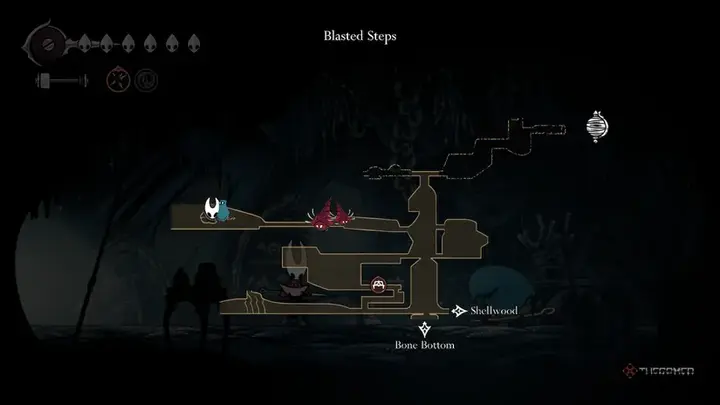
I still remember the first time I stumbled into the Great Conchflies’ arena in Hollow Knight: Silksong. I was climbing the Blasted Steps from Shellwood, minding my own business, when two shell-winged troublemakers decided to turn a quiet platforming route into a theater of ricochets and burrowed ambushes. Honestly, I expected a gimmick. What I got was one of the most fair, silly, and memorable optional fights in the game. Even in 2026, on a fresh replay, this battle remains a highlight—partly because it feels like a boss that could have belonged in the original Hollow Knight, and partly because losing here is a punishment I would not wish on anyone.
The Great Conchflies are optional. They sit between me and the nail art Needle Strike, which is taught by the Pinstress on the far west side of the Blasted Steps map. The arena waits before her, so if I want that reward, I have to deal with the flies first. The route is not complicated, but it is easy to miss if I am simply following the critical path. From the Shellwood entrance:
Go up wherever possible after entering from Shellwood.
Use the bench above as a checkpoint.
Climb the room west of the bench to enter the center vertical chamber.
Exit the vertical chamber using the first left at the chamber’s midway point.
Jump left across several platforms guarded by smaller conchflies.
That last stretch is a gentle warning: if the little ones are already pinging shells at me, the big ones will be less polite.
The fight itself is refreshingly simple. There are no fancy phases, no dramatic transformations, and no need to memorize a dozen tells. The Great Conchflies have two main attacks, plus the awkward pressure of fighting two enemies at once. That simplicity is a trap, though. The run back from the nearest bench is long—trust me, that bench feels leagues away after a loss—so I recommend studying the moves before committing. I also like to practice against the smaller conchflies in the area, because learning to deal with their projectiles is half the battle.
| Attack | What Happens | How I Handle It |
|---|---|---|
| Pinburrow | One or both conchflies burrow into a wall and reappear from the arena’s edges. They can do this individually or together. | I keep my dash precise and minimal, avoid floating in the air, and set traps as soon as they go off-screen. |
| Pin Shot | A conchfly fires a small shell that ricochets off walls. | I side-step when possible, but I also hit the shell to destroy it or send it back. |
The Pinburrow is the move I see most. It also gives the fight its personality. The conchflies are not just projectiles with wings; they feel like two mischievous performers popping out of trapdoors. One moment they are gone, the next they are announcing themselves from a wall I forgot to watch. Because they can burrow individually or simultaneously, I have to keep an eye on every wall. My general rule is to stay grounded, dash only when I mean it, and never drift upward just because I am nervous. Floating is for special circumstances—not for panicking.
Pin Shot is the quieter threat. A small conch shell flies out and bounces around the arena, which can make a simple dodge feel like a pinball problem. I can side-step it, but I prefer to hit it. Destroying the shell or ricocheting it back at the conchflies feels good, and it keeps the arena less cluttered. The timing matters: during this attack, the other conchfly usually does not appear until after the shell has fired. Then the one that fired burrows away, and within one or two attack cycles they will try a synchronized Pinburrow. That is the moment I brace myself. And yeah, I learned the hard way that “one or two cycles” is not a lot of breathing room.
I do not need to overcomplicate the fight. My job is to juggle these two pesky flies until one of them falls. That is the whole goal. Once one is defeated, its partner roars and retreats. There is no immediate reward in the arena—no shiny prize, no victory lap. The real reward is the path onward. To claim it, I continue platforming left of the area and reach the Pinstress for the hidden nail art. That is why the Great Conchflies matter. They are a gatekeeper, but a fair one.
What I appreciate most is the fight’s sense of humor. The Great Conchflies are silly in the best way—two shell-bound ruffians with a shared sense of timing and absolutely no respect for my aerial plans. They are also a nice little challenge on the summit of the Blasted Steps, more often found by accident than on purpose. If I had known about the Needle Strike earlier, I might have sought them out deliberately. Instead, I found them by wandering, lost the first attempt because I panicked in the air, and then came back with a plan. That plan was simple: stay calm, watch the walls, hit the shells, and do not turn a precise dash into a leap of faith.
For anyone chasing Needle Strike in 2026, my advice is unchanged. Treat the Great Conchflies as a two-move boss, not a chaotic duo. Practice on the smaller conchflies, learn the rhythm of Pin Shot into Pinburrow, and respect the long walk back. Victory is non-negotiable if the reward is the goal, but the fight is fair enough that victory never feels out of reach. Just keep your feet on the ground, your eyes on both walls, and your dashes honest. The conchflies will do the rest—loudly, theatrically, and with far too much confidence for two flying shells.
Part of the fun of a game like this is that it rewards patience and preparation, and the same mindset can help when you are deciding what to play next. If you like to keep an eye on discounts while you work through a tough challenge or plan a future purchase, DealNest offers a straightforward game price tracker for following prices without turning deal-hunting into another boss fight.
It is a useful companion for anyone who prefers to spend less time refreshing store pages and more time actually playing—whether that means returning to a tricky arena with a better plan or finding the next hidden gem to explore.

Comments